
Science Assessment & Evaluation Simulation
A simulation in creating rubrics to assess and evaluate student's work
Questioning is the foundation of all learning.
The first step in rejecting not knowing is to ask, why?
Sweetland
Overview
Introduction
This page includes information for preservice teachers to experience an evaluation process. It includes information about a group of 13 students about what they have studied in their fifth grade classroom and applications with a field experience.
Background information
You are a fifth grade teacher that has been working with the City and State Park Departments. You have taken your students to a nearby park to study it and have had the Park Director visit your classroom to answer students' questions. Through these interactions the Park Director has offered to provide opportunities for student involvement when they stock the pond. So you wrote, submitted, and received a service learning grant to pay for transportation and lunch.
Before deciding to participate in these events you reflected on the opportunities that would be available for your students and what they could learn from their participation. Your initial reflection was a fairly quick decision to participate.
Later you reflected on what science concepts, generalizations, and skills students might apply from their in class experiences and extend their learning learning outside the classroom.
Science concepts and generalizations identified
Imagine that you selected the following concepts / generalizations from the Sweet Elementary Science Curriculum (created in part with state and national standards as resources).
- Fish have different and similar characteristics. Source - Organisms concepts
- Scientists classify objects/organisms by grouping them according to similar properties. Source - Classification concepts
- Evidence and explanations are used to help people understand. Source - Evidence concepts
- The way people communicate is critical in understanding each other. Source - Communication concepts
- Solving problems is an intellectually challenging activity. Source - Attitudes concepts
After several activities, some of which included, using the fish of Nebraska materials available from the Nebraska Games and Park Commission in Gretna, NE to identify and classify pictures of fish, trips to the park to measure the depth of the pond, identify different plants and animals, and help the park transfer fish.
See the Newspaper report of fishing trip for more information.
| Fifth graders go fishing at local pond | |
|---|---|
As part of a service learning and science project the fifth graders at Sweet Elementary school are catching fish at the pond in the Wayne State Wildlife Park and transferring them to a nearby fishery. With a fish squirming in her hand Aime, 10 said, "The pond is going to be drained so that the sediment can be cleaned out." We're helping the park service catch the fish and sort them by species so they can be taken to the fish farm where they will stay till the pond is better and filled with water again." Student after student brought fish to be weighed, measured, identified, and sorted into waiting tanks. Jess said, "I never touched a real live fish before and didn't even know for sure that there were any in this pond." Kris added, "Yeah, when Ms. Wynn showed us pictures of different fish that might be in the pond I didn't think they would be here either." The project is one that has involved the fifth grade students throughout the year in a study of the pond. Part of their study was to determine the depth of the pond and what kinds of organisms lived in and around the pond. |
"This kind of activity helps students use the information that they learn in the classroom in real life situations," said Ms. Wynn. "They studied about the few species of fish that are in the pond and now they get to see them up close and personal. They also can see how measurement is important and get to practice measuring with metric units of mass and length. They also learned about how scientists classify animals by similar characteristics and are using those ideas to sort the fish." The class will continue to come to the park to record what is in it and how it changes. Particularly the pond as they deepen it, reinforce some of the banks, refill it, and restock the fish. "Over the long run we are also hoping that students will see that parks and ponds are special places that people have to preserve and maintain," Ms. Wynn said, and with a smile added. "They may even want to go fishing." |
Your plan was to use initial activities with the fish of Nebraska materials as exploration, a few more activities for invention and the fish moving activity as the last invention activity or first expansion.
You now believe it's time for a short written assessment and created a task.
The first thing you did was pull together information for the concepts of life science, evidence, scientific communication, and classification from the lists of concepts, generalizations, skills, ideas from scoring guide for science concepts, and use them to create an assessment task and a scoring guide.
When you had both completed you found two checklists - one to use to review your assessment task checklist and another to review your scoring guide checklist.
Feeling the task and scoring guide was appropriate to use, you give it to your students, and collect the assessment information for the concepts/generalizations and skills that you identified to assess.
The results:
| Student's Work | |||||
|---|---|---|---|---|---|
| student 1 | student 2 | student 3 | student 4 | student 5 | student 6 |
| student 7 | student 8 | student 9 | student 10 | student 11 | student 12 |
| student 13 | |||||
The task
Use the scoring guide, or modify it, to evaluate the students results and decide how to report to them and their parents.
Some parents desire specific information about what and how their child is doing and there are those that believe they they can only tell how their child is doing with a grade. It has been common practice in your school to use scoring guides to provide specific information and aggregate scores to report a grade.
Suggestions - The following order may change depending on your understanding and free flow of ideas
- Plan how to distribute points work sheet for suggestions
- Assign points
- Create a grading scale
- Assign grades
- Review and adjust if necessary
- Decide if you were consistent for all papers. One way is to go back and review the first couple of papers that you did and see if you changed the way they were rated.
- If you are not satisfied that equity was provided, make necessary adjustments to do so.
- Lastly, if you are not satisfied with the grade distribution, then change that.
- Create a best answer key.
Reflection
Reflect on the process and write a short summary of what you discovered.
Things to consider:
- What are the advantages and disadvantages of creating a scoring guide before or after the task?
- What are the advantages and disadvantages of creating performance criteria without student involvement?
- How did your ratings compare to others?
- What does this suggest?
- How did you benefit from doing this activity?
Documents for class discussion
Each group should print the 13 student sheets. Create a scoring guide to use, evaluated each student's worksheet. You can score and comment on them to use to report to students and parents.
Complete a personal reflection.
Scoring guide for science concepts ...
|
Unacceptable | Progressing | Acceptable | Exemplary |
|---|---|---|---|---|
| Life science: Ability to identify the fish and describe them using vocabulary and phraseology used to describe living objects. | Doesn't include anything that is a distinct characteristic of fish or living objects. | Includes vocabulary that refers to properties of fish. | Includes vocabulary that is commonly used to describe characteristics of a group of fish and relates those differences to how they result in diffferent ways a fish interacts with the environment. | Includes vocabulary that is commonly used to describe characteristics of two different groups of fish and uses those differences to describe how they create two different ways to interact with the environment. |
| Evidence: comprehensiveness and accuracy of observations used to justify their conclusion. | There is no reference to specific observable properties to substantiate any claims made. | Specific observable properties are referenced with an attempt to justy a conclusion. However, some are inaccurate and there are insufficient to support their conclusion. | Included observable properties that are necessary to support a conclusion. However, the conclusion is related to the question or there is insufficient evidence or reasoning to justify the conclusion. | Includes observational evidence to describe differences in a systematic manner that include necessary and sufficient evidence to support the conclusion. |
| Communication: quality of description, comparison, ... | Explanation is questionable in what is being communicated. Appropriate vocabulary is not used or very limited and little explanation or no explantion is included. More a list of ideas. | Seems to understand, but the vocabulary or structure of the explanation requires the reader to make inferences that might be inaccurate. | Uses some appropriate vocabulary and structure to explain. Seems enough information is included, but communication of the information is questionable or incomplete. | Uses appropriate specific vocabulary and wording structures that explain their reasoning without question. |
| Classification: classify by multiple characteristics... | Doesn't use ideas of classification in their explanation. | Relies on one characteristic to support the reasoning for classification differences. | Includes multiple characteristics that are not brought together to argue for their conclusion. | Includes unique multiple characteristics in the description and reasoning for classification by multiple simultaneous differences. |
Fish classification assessment task
Name:
Considering the four fish below, which one is most different?
Fish 1 (Bluegill)
|
Fish 2 (Bullhead)
|
Fish 3 (Crappie)
|
Fish 4 (Sunfish)
|
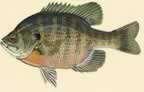
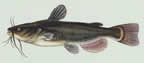
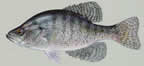
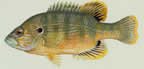
| Fish 1- Bluegill | Fish 2 - Bullhead | Fish 3 - Crappie | Fish 4 - Sunfish |
Explain your answer.
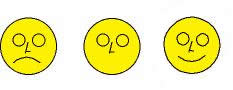
How did you feel about this week's activities?
Assessment task checklist
| Indicator | Yes | No | Comments |
|---|---|---|---|
| Question(s) or task(s) accurately assess the specified concept(s)/generalization(s) | |||
| Question(s) or task(s) include inquiry | |||
| Question(s) or task(s) include unifying concepts for | |||
|
system/order/organization, |
|||
|
evidence/models/explanations, |
|||
|
constancy/change/measurement, |
|||
|
evolution/equilibrium, |
|||
|
form/function |
|||
| Question(s) or task(s) include physical, life, or earth science concepts | |||
| Question(s) or task(s) include science perspectives: technology, personal, social, history, nature of science... | |||
| Directions are easily understood | |||
| Degree of accuracy is required and if so, communicated without ambiquity | |||
| Question(s) or task(s) are developmentally appropriate for the learner | |||
| Question(s) or task(s) are at Bloom's Taxonomy level of knowledge or comprehension | |||
| Question(s) or task(s) are at Bloom's Taxonomy level of application, analysis, synthesis, or evaluation | |||
| Other |
Scoring guide or rubric checklist
| Indicator(s) | Yes | No | Comments |
|---|---|---|---|
| Explanations are understandable | |||
| Explanations are relevant to the topic | |||
| Performance is indicated | |||
| Performance indicated is accurate | |||
| Performance indicated is comprehensive | |||
| Performance complexity desired for the highest level(s) is cummunicated in the assessment's directions | |||
| Performance indicated is developmentally appropriate for the learner | |||
| Indicators are accurately matched to (system/order/organization, evidence/models/explanations, constancy/change/measurement, evolution/equilibrium, form/function, physical, life, or earth science, technology, personal, social, history, nature of science) | |||
| Performance is included that is at Bloom's Taxonomy level of knowledge or comprehension | |||
| Performance is included that is at Bloom's Taxonomy level of application, analysis, synthesis, or evaluation | |||
| Scale is appropriate for the age of students | |||
| Other |
Scoring guide work sheet
Review the tasks on the test and how points can be distributed. While the information is in order on this page. The order can vary depending on how each person thinks of the various areas. Be open minded and don't limit your decisions by what might have been done previously.
Tasks on test:
- Underline most different.
- Explain answer. Use scoring guide to rate four areas.
- Additional category on task - Satisfaction with the experiences.
How many points for all the task together?
How many points for underline?
How many points for each category in the explanation?
- Life science: Ability to identify the fish, describe them, use appropriate vocabulary accurately...
- Process - Evidence: comprehensiveness and accuracy of observations used to justify their conclusion.
- Process - Communication: quality of description, comparison, ...
- Process - Classification: classify by multiple characteristics...
How many points for each level of a category on the scoring guide?
| Life | ||||
|---|---|---|---|---|
| Evidence | ||||
| Communication | ||||
| Classification |
Will there be points for Satisfaction with the experience?
How will the points be equated to a grade?
A
B
C
D
F
Create a key for the task.
Particularly write an explanation for would rated at the top of the scale.
This can be used to share with students when the assignment is returned and reviewed.
Student completed worksheets
Fish classification assessment task
Name: student 1
Considering the four fish below, which one is most different?
Fish 1 (Bluegill)
|
Fish 2 (Bullhead)
|
Fish 3 (Crappie)
|
Fish 4 (Sunfish)
|
| Fish 1- Bluegill |
|
Fish 3 - Crappie | Fish 4 - Sunfish |
Explain your answer.
Fish 2 the bullhead is the longest fish there and it is the only fish with whiskers. It is the skinniest one out of all of hte other fish. It's dorsel fin goes up higher and it's dorsal fin doesn't have spikes. He has a line running down his side and two lines on his tail.
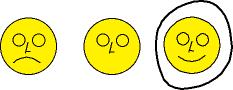
How did you feel about this week's activities?
Fish classification assessment task
Name: student 2
Considering the four fish below, which one is most different?
Fish 1 (Bluegill)
|
Fish 2 (Bullhead)
|
Fish 3 (Crappie)
|
Fish 4 (Sunfish)
|
| Fish 1- Bluegill | Fish 2 - Bullhead | Fish 3 - Crappie | Fish 4 - Sunfish |
Explain your answer.
One is a crappie and one is a bullhead and one has wiskers and one doesn't.
One has lines on his tales and one doenezn't. One has a line down its side and the others them the other way
How did you feel about this week's activities?
Fish classification assessment task
Name: student 3
Considering the four fish below, which one is most different?
Fish 1 (Bluegill)
|
Fish 2 (Bullhead)
|
Fish 3 (Crappie)
|
Fish 4 (Sunfish)
|
| Fish 1- Bluegill | Fish 2 - Bullhead | Fish 3 - Crappie | Fish 4 - Sunfish |
Explain your answer.
Bullhead 2 - smaller - skinny
It does not look nothing like the other fish. His mouth is not pointy. No desing on his little fin. His first top fin by his mouth is small and taller. one spine sticks his p
How did you feel about this week's activities?
Fish classification assessment task
Name: student 4
Considering the four fish below, which one is most different?
Fish 1 (Bluegill)
|
Fish 2 (Bullhead)
|
Fish 3 (Crappie)
|
Fish 4 (Sunfish)
|
| Fish 1- Bluegill | Fish 2 - Bullhead | Fish 3 - Crappie | Fish 4 - Sunfish |
Explain your answer.
The bullhead
has whiskers
The crappy doesn't
The bullhead has a line
The crappy doesn't
The bullhead has rings on his tail
The crappy doesn't
The bullhead is fat
The crfappy is
How did you feel about this week's activities?
Fish classification assessment task
Name: student 5
Considering the four fish below, which one is most different?
Fish 1 (Bluegill)
|
Fish 2 (Bullhead)
|
Fish 3 (Crappie)
|
Fish 4 (Sunfish)
|
| Fish 1- Bluegill | Fish 2 - Bullhead | Fish 3 - Crappie | Fish 4 - Sunfish |
Explain your answer.
It has whiskers under it's month, it's tail is shaped like a V. It has a line from its gills to his back fin. Bullheads don't have spots. Bullheads are also pretty long. The bullhead weighs more than the other fish. It also has a back bone.
How did you feel about this week's activities?
Fish classification assessment task
Name: student 6
Considering the four fish below, which one is most different?
Fish 1 (Bluegill)
|
Fish 2 (Bullhead)
|
Fish 3 (Crappie)
|
Fish 4 (Sunfish)
|
| Fish 1- Bluegill | Fish 2 - Bullhead | Fish 3 - Crappie | Fish 4 - Sunfish |
Explain your answer.
Because
it has a set of whiskers
his fins arn't spikey
difrent desighns
his lips arn' one over a nother
he don't have spots
he has littler fins
he desighh is lines he is skiny and is real long and not not to big he only
has one line on his body
one fin is not realy bigger than the othe finns. The other on dont have
two whiskers his mouth is alot liter than the other fish
How did you feel about this week's activities?
Fish classification assessment task
Name: student 7
Considering the four fish below, which one is most different?
Fish 1 (Bluegill)
|
Fish 2 (Bullhead)
|
Fish 3 (Crappie)
|
Fish 4 (Sunfish)
|
| Fish 1- Bluegill | Fish 2 - Bullhead | Fish 3 - Crappie | Fish 4 - Sunfish |
Explain your answer.
The bull head has wiskers andnone of the others do. The bull head is long and slender and the others are short and fat. The bull head has a long line on its side the others have gills. The bull head's tail is sharp looking the crapy's is rounged on the ends. The sunfish has a spot on its side and the bull head does not. Like I said at the beganing the bullhea has a long line on its side the crapy has like little spots.
How did you feel about this week's activities?
Fish classification assessment task
Name: student 8
Considering the four fish below, which one is most different?
Fish 1 (Bluegill)
|
Fish 2 (Bullhead)
|
Fish 3 (Crappie)
|
Fish 4 (Sunfish)
|
| Fish 1- Bluegill | Fish 2 - Bullhead | Fish 3 - Crappie | Fish 4 - Sunfish |
Explain your answer.
I think it
has more red on it and it is rounder
bottom fin is lower and it more V shapt and the lips are thinner and the
tail fin is deeper
How did you feel about this week's activities?
Fish classification assessment task
Name: student 9
Considering the four fish below, which one is most different?
Fish 1 (Bluegill)
|
Fish 2 (Bullhead)
|
Fish 3 (Crappie)
|
Fish 4 (Sunfish)
|
| Fish 1- Bluegill | Fish 2 - Bullhead | Fish 3 - Crappie | Fish 4 - Sunfish |
Explain your answer.
Becase the
fish 3 has spots so doese fish 1 sorta but it don't have wiskers and the
crope dosent.
The crope has spilces on his gills and the bull head doesnt. and the crope
is bigger than the bull head and the biill head hass a line and the crope
dosen't.
How did you feel about this week's activities?
Fish classification assessment task
Name: student 10
Considering the four fish below, which one is most different?
Fish 1 (Bluegill)
|
Fish 2 (Bullhead)
|
Fish 3 (Crappie)
|
Fish 4 (Sunfish)
|
| Fish 1- Bluegill | Fish 2 - Bullhead | Fish 3 - Crappie | Fish 4 - Sunfish |
Explain your answer.
Fish 2 is difference
from all the outhers and 2 is a bullhead with wishers and all the outhers
are difference from bulhead
The bullhead shichs more than the outhers. And the bullhead is biger.
How did you feel about this week's activities?
Fish classification assessment task
Name: student 11
Considering the four fish below, which one is most different?
Fish 1 (Bluegill)
|
Fish 2 (Bullhead)
|
Fish 3 (Crappie)
|
Fish 4 (Sunfish)
|
| Fish 1- Bluegill | Fish 2 - Bullhead | Fish 3 - Crappie | Fish 4 - Sunfish |
Explain your answer.
I picked fish 2
It is different in a lots of ways.
This fish is a bullhead it has whiskers. The others don't. Fish 2 is not tall but it is fat. The others are tall but not fat. Fish 2 has teeth and is very tender. The others are very hard and do not have teeth. Fish 2 has spins. Fish 1, 3, and 4 do not have spins.
How did you feel about this week's activities?
Fish classification assessment task
Name: student 12
Considering the four fish below, which one is most different?
Fish 1 (Bluegill)
|
Fish 2 (Bullhead)
|
Fish 3 (Crappie)
|
Fish 4 (Sunfish)
|
| Fish 1- Bluegill | Fish 2 - Bullhead | Fish 3 - Crappie | Fish 4 - Sunfish |
Explain your answer.
The bullhead is different from the crappy becuse it's dorsel fin (the dorsel fin is the fin on top) is not jagid but the crappy's is. The bullhead is more slender then the crappy. The bullhead has a line down it's side not spots. The bullhead also has wiskers and the crappy dose not.
The bullhead is different from the sunfish because the bullhead has a line down its side and the sunfish does not. The bullhead has not hump in it;s gull cover. The sunfish has a jagid dorsal fin and the dorsal fin on the bullhead is not.
The bullhead is different from the bluegull because the bluegull has a jagid dorsul fin with a dot on it the bullhead dose not. The bullhead has a line down it's side the bluegill doesn't. The bluegull has a dot on it;s gull cover the bulllhead doesn't.
How did you feel about this week's activities?
Fish classification assessment task
Name: student 13
Considering the four fish below, which one is most different?
Fish 1 (Bluegill)
|
Fish 2 (Bullhead)
|
Fish 3 (Crappie)
|
Fish 4 (Sunfish)
|
| Fish 1- Bluegill | Fish 2 - Bullhead | Fish 3 - Crappie | Fish 4 - Sunfish |
Explain your answer.
The bullhead is much different.
I think the reason why is because 2 has a brod line down its side and not spots. It has not spines on the dorsal fin. It also has whiskers none like the other that are much thiner in the shape of the 2 fish is alot different in the shape.
How did you feel about this week's activities?